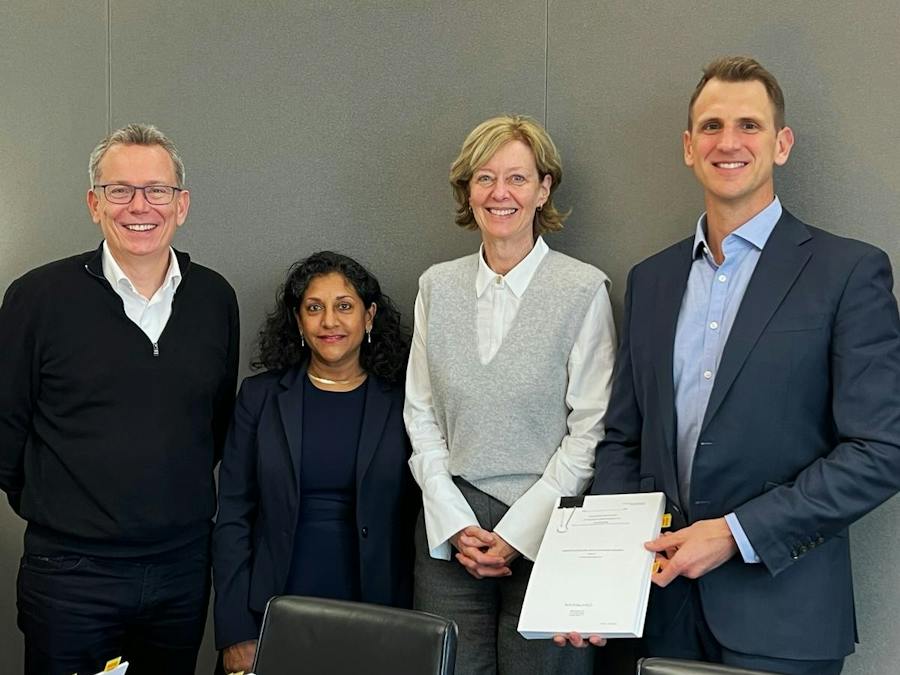





AP Ventures, investing in early-stage industrial and energy technologies, has announced the final close of AP Ventures Fund III LP at £230 ($300) million. Commitments came from a global base of institutional investors, with sovereign wealth funds, corporates, pension funds and family offices among the backers. Since its initial close in 2024, Fund III has backed 13 portfolio companies developing technology that makes industrial and energy systems more resilient and efficient.
Investing at Seed and Series A, Fund III works alongside founders as they take their technology into commercial use and scale it up in industrial settings. Low-carbon molecules sit at the centre of the strategy, including hydrogen across its production, storage, transport and end use. Carbon capture and utilisation is a second focus, with circularity and advanced recycling also in scope, aimed at energy-intensive, hard-to-abate sectors such as chemicals, steel, aviation and heavy mobility.
Teragen Energy, one of the portfolio companies, develops metal-supported solid oxide fuel cells that can provide clean, on-site power for data centres and other critical infrastructure. Aether Fuels makes drop-in liquid fuels for aviation and shipping from industrial waste gases as well as biogas and waste biomass, while CREW Carbon uses a mineral-based process to replace conventional wastewater treatment chemicals and generate carbon removal credits. Rosy Soil sells peat-free potting soils made from biochar. Reclinker uses the Electric Arc Furnace process from steelmaking to turn used cement into on-specification Ordinary Portland Cement. Lydian Labs makes synthetic fuels from carbon dioxide, using electricity and water in modular reactors that track variable power supply, and Rubi Laboratories turns carbon dioxide into high-purity cellulose for textile fibres such as viscose and lyocell.
The close comes as rising power demand and tightening supply chains for critical minerals and materials push up demand for technology that improves productivity and strengthens supply security. AP Ventures also connects founders with a global network of financial and industrial partners. Since 2013, its team has invested in companies across complex industrial and energy segments, drawing on experience in chemistry, materials science, engineering and finance.
This final close reflects the confidence our existing and new investors place in AP Ventures’ ability to identify and support exceptional technology companies. Strong support from returning investors, alongside new institutional partners, allows us to keep backing the technologies industry needs to operate more productively and securely, from the materials it depends on to the processes and data that run it.
We focus on backing technically differentiated companies that solve real operational problems across the industries and value chains in which we invest. Whether improving energy efficiency, resource productivity, safety, environmental performance or supply-chain resilience, this combination of technical rigour and commercial pull is what continues to define AP Ventures’ approach.