




Fault Line, a clinical AI safety research startup, has raised £2.3 million in pre-seed funding led by Concept Ventures and Frontline Ventures. Based in London, Fault Line independently tests the safety of patient-facing clinical AI products and evaluation protocols.
Healthcare services buying and deploying AI tools have no mandated safety standard, so they rely on developer testing and benchmark scores that evaluate responses to simulated or pre-written patient conversations. In its first study, Fault Line tested leading mental health safety benchmarks against seven versions of a mental health chatbot ranging from one that never advised users to seek help in a crisis to one following detailed safety protocols. None of the benchmarks reliably separated safe from unsafe chatbots or performed adequately on both risk sensitivity and conversational realism. In a second study with the UK AI Security Institute and the University of Oxford, Fault Line identified 22 ways AI can harm patients, including failing to recognise a mental health crisis and giving unsafe medication advice, and found that the best of 36 clinical benchmarks covered only 16 risks.
Fault Line already works with clinical AI companies to optimise benchmarks, evaluate AI products, support AI medical device submissions and improve guardrail performance. Its team of MDs and PhDs has published in journals including Nature, Nature Medicine and BMJ, and its preprints cover clinical AI evaluation frameworks and risk taxonomies, including a paper accepted for NeurIPS 2026 GenAI4Health.
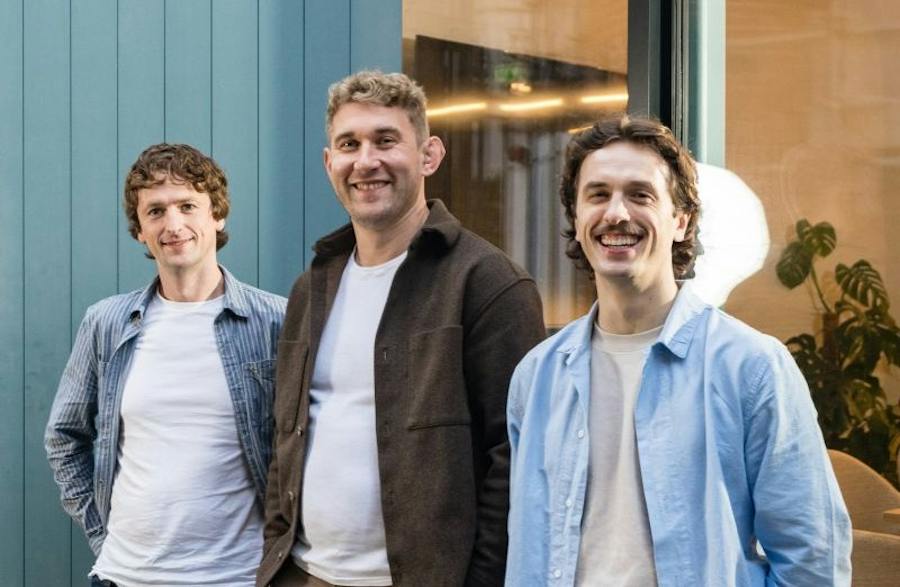
Co-founders Max Rollwage, Ben Carrington and George Prichard previously led the AI, research and regulatory teams at Limbic, developer of the first Class IIa AI medical device for mental health. The funding will grow its research programme, adding researchers and engineers to validate new testing methods and publish safety evidence for the wider ecosystem.
Everyone we speak to in clinical AI wants to do right by their patients. Benchmark scores have become the industry’s main way to show a product is safe, yet nobody had checked whether the benchmarks work. We built Fault Line to solve that problem with the industry.
Take suicide risk. Most benchmarks test it with users who state suicidal thoughts directly. In real conversations people rarely do that. They hint, they joke, they talk about being a burden, and the risk builds over many messages. A test that can’t fail an unsafe product gives false reassurance to developers, regulators and patients alike.
Clinical AI needs to be proven safe by someone independent, not just by the company building it. Max, Ben and George are tackling a fundamental question: how do we know the tests themselves work? We backed Fault Line because that independent scrutiny should be part of how clinical AI is developed from the start, not something added afterwards.
AI can increasingly do the clinical work. What slows adoption now is that nobody can show, objectively, that it’s safe. Right now the industry is marking its own homework, using benchmarks that often can’t tell a safe product from an unsafe one. Max, Ben and George had to answer this question themselves at Limbic, and Fault Line gives everyone else building in clinical AI a rigorous way to answer it.