




Gracia AI has raised £1.3 million in a funding round led by EWOR, with participation from one of the early pioneers behind NeRF. The company develops full-stack technology for 4D Gaussian Splatting across capture, processing, editing and deployment. The funding supports rapid adoption of high-quality volumetric production tools as demand for realistic 3D and 4D content grows.
When Gracia AI closed its first round in early 2024, the company was experimenting with static Gaussian Splatting and early research prototypes. Dynamic video splats did not yet exist. Over the past year, the team has moved far beyond these initial experiments. Gracia AI became the first company to bring real-time 4DGS playback to standalone VR headsets rather than relying solely on PCVR, removing the need for external hardware.
The company also introduced a production-ready VFX and CG pipeline, enabling studios to integrate 4DGS into real film and commercial workflows for the first time. Gracia developed a creative toolset for editing, camera control and scene manipulation natively in 4DGS. The startup now offers a complete technology stack for deploying 4DGS content across XR, VFX, gaming, advertising and emerging creative applications.
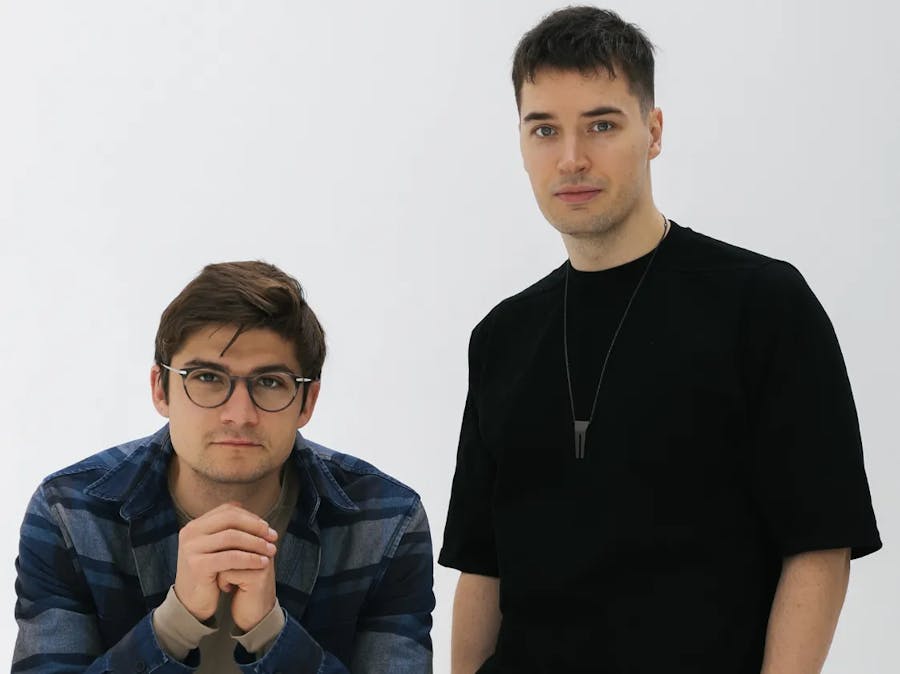
Gracia began after co-founder and CTO Andrey Volodin posted a technical demo online that went viral within hours. Creators quickly asked for tools that did not yet exist. Volodin and co-founder Georgii Vysotskii had initially imagined a volumetric video platform but learned that the real bottleneck was production, as creators lacked the means to generate high-quality 4DGS content. This insight shaped the company's direction.
Gracia now operates what it describes as the first scalable infrastructure for capturing, processing, editing and deploying 4DGS volumetric video. Its system combines cloud-accelerated processing with a full editing suite including timelines, camera rigs, scene controls and reconstruction tools. Plugins for Unity and Unreal support developers, while WebGPU-powered 2D playback enables viewing on Mac and in the browser. Standalone VR playback is available on Quest 3 / 3S and Pico 4 Ultra, with all other headsets supported through PCVR. With file sizes of around 1GB per minute and smooth real-time playback, Gracia is bringing Gaussian Splatting into everyday production environments.
The company continues to advance 4DGS quality, particularly for fast motion. Earlier models struggled with rapid movement and often introduced artifacts or required large numbers of Gaussians. Gracia's recent breakthroughs allow footage captured at 50fps to be played back in high-quality slow motion with minimal artefacts, enabling performance suitable for film, sports and premium content.
Gracia AI is gaining traction across major technology companies, film studios and entertainment brands. Its 4DGS engine is being tested in next-generation VFX pipelines, used for creative R&D, and recently powered a 4DGS runway experience for Karl Kani. The company's volumetric technology also supports immersive attractions at PortAventura, one of Europe's largest theme parks. With more than 50 million XR headsets already shipped and nearly 100 million anticipated by mid-decade, demand for photorealistic 3D and 4D content is increasing, and Gracia aims to address the industry's production challenges.
Volumetric video has existed for a decade, but quality and performance limitations held it back. Gaussian splatting finally closes that gap, and Gracia brings it into production.
Earlier versions struggled with fast, complex motion, either requiring an excessive number of Gaussians or producing visible artifacts. Our latest release finally solves this: even footage captured at 50fps can now be played back in ultra-smooth slow motion with minimal artifacts, while preserving fine details. This makes 4DGS viable for high-demand use cases like sports and film.