Helical, a virtual AI lab for pharmaceutical research and development startup, has raised £7.5 million in a seed round led by redalpine, with participation from Gradient, BoxGroup, Frst and angels. It develops a system that enables scientists to test biological hypotheses computationally before committing to physical experiments.
Pharmaceutical research faces constraints from slow and expensive experimentation, with around 50 new drugs approved each year despite more than 10,000 known diseases. While biological foundation models allow computational testing of hypotheses, work between model output and scientific decision-making remains fragmented. Helical addresses this by providing an application layer that turns model outputs into reproducible systems that scientists can run, trust and defend. Its platform includes a Virtual Lab for biologists and translational scientists and a Model Factory for machine learning engineers and data scientists, built on shared data, models and results to enable collaboration across teams.
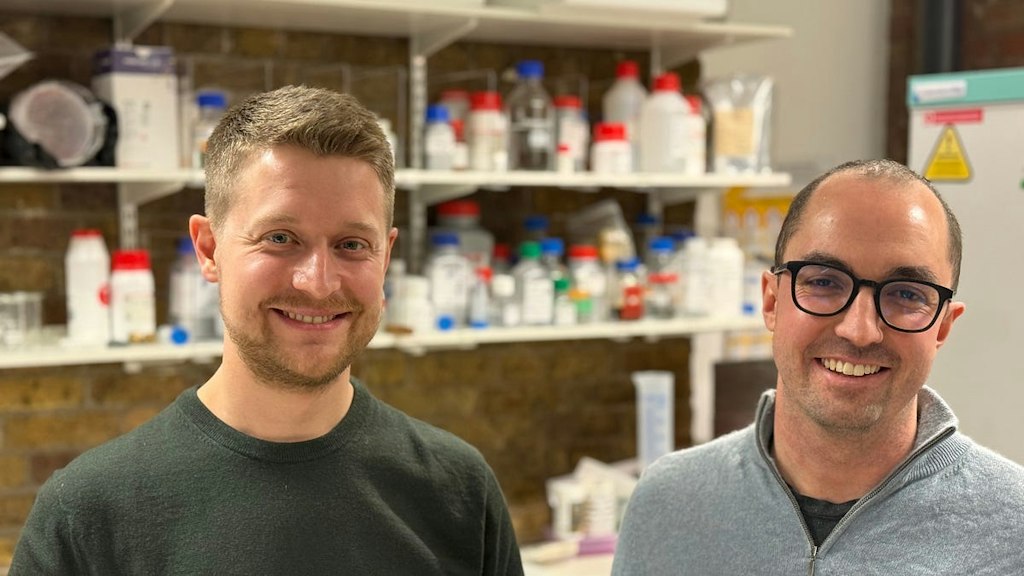
Helical was founded in early 2024 by three school friends who approached the same problem from different backgrounds. Rick Schneider previously built technology at Amazon and worked at Celonis, Maxime Allard led data science teams at IBM and pursued a PhD in reinforcement learning and robotics, and Mathieu Klop became a cardiologist and genomics researcher. The founders identified an opportunity to build an application layer to move pharmaceutical teams from model experimentation to reproducible discovery.
It is already in production with multiple top-20 global pharmaceutical companies, including a public collaboration with Pfizer on predictive blood-based safety biomarkers. Across deployments in target identification, biomarker discovery and therapeutic design, teams have reduced discovery timelines from years to weeks and expanded into adjacent therapeutic areas.
The industry context includes more than $300 billion in annual R&D spending, timelines exceeding a decade, average costs of more than $2 billion to bring a drug to market, and clinical trial failure rates above 90 percent. Helical positions its system as a way to make computational discovery reproducible and explainable, enabling teams to move from hypothesis to decision more quickly.
The models alone don’t discover drugs. The system does. Pharma teams need a system that turns foundation models into workflows scientists can run, validate, and defend. We built Helical to make in-silico science reproducible at pharma scale, so teams can go from hypothesis to decision in days instead of months
We are at a unique point in time where biological foundation models and general language reasoning models are converging. We backed Helical because we strongly believe they have what it takes to build the pharma AI orchestration platform that will drive this transition from siloed AI models to integrated virtual AI labs.