Callosum, an AI infrastructure startup, has raised £75 million in a seed round led by Atomico, with participation from Plural, DCVC and UK Sovereign AI. Callosum's software layer co-optimises AI models and chips, orchestrating each workload across the hardware best suited to run it and removing the engineering complexity of achieving frontier performance. The funding is one of the largest seed rounds ever raised in Europe and comes less than six months after Callosum emerged from stealth with a £7.5 million pre-seed round.
Frontier models offer extraordinary capability, but their cost has grown unsustainably, and at the physical level the one-chip-fits-all approach has imposed structural risks on buyers, developers and nation states. Callosum's orchestration platform decomposes AI workloads and distributes each task to the model and processor best suited to execute it, delivering inference tailored to what the task actually needs on speed, cost and precision. Rather than making tokens cheaper by brute force, the heterogeneous approach aims to make each token worth more, directing every unit of computation to where it produces the most useful intelligence per amount of money spent. The platform is already in production: on complex agentic workloads in financial services it ran 4x faster, cut compute costs by 70% and improved task success rates by 10% versus the same workloads on a single frontier model running on conventional GPU infrastructure. Launching alongside the raise is a first product, a family of APIs that lets developers adopt frontier AI hardware without rewriting their applications, collapsing what is often months of engineering work into a single integration.
Callosum's opportunity stems from a structural shift in the AI industry, with spending moving rapidly from training ever-larger foundation models towards better inference while a Cambrian explosion of specialised processors, from wafer-scale to analog and optical computing, challenges the era of single, monolithic chips. Those performance results come through Callosum's partnership with Cerebras, the US chipmaker whose wafer-scale processors are among the fastest available for AI inference. Silicon partnerships also include Rebellions in South Korea, Axelera in the Netherlands and Tendrils in the United Kingdom, alongside infrastructure partner Supermicro. Callosum is a founding member of the Scaling Inference Lab at ARIA, the United Kingdom's advanced research agency, where it is integrating emerging technologies from companies including Oriole Networks and Lumai, which use light rather than electricity to move and process data, into large-scale AI systems.
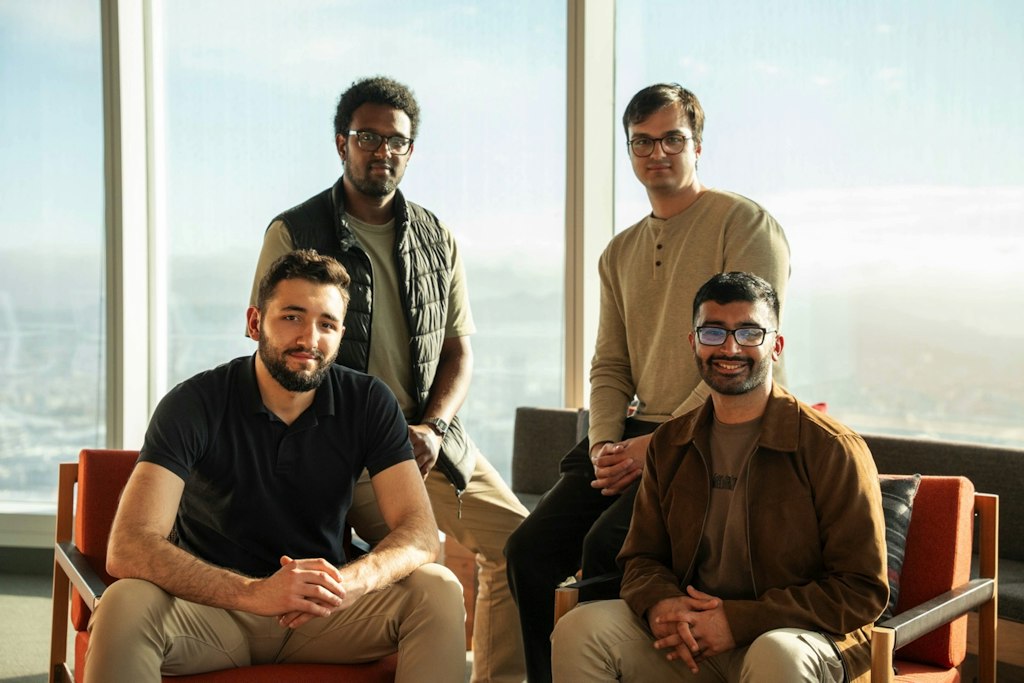
Founders Danyal Akarca and Jascha Achterberg met while earning their PhDs at Cambridge, where their research examined how the brain achieves intelligence not by replicating one type of neuron billions of times but by combining specialised circuits, and they argue AI systems will follow the same pattern. The funding will be used to scale the technology, deepen partnerships across silicon ecosystems and expand the team. A selection of Callosum's tailored-inference APIs go live today, with further customer deployments and partnerships to be announced in the coming months.
The industry has been betting that one model or one kind of chip will rule them all. But nature shows us the opposite. Intelligence is collective and will emerge from many specialised systems working together. We believe AI needs a new axis of scaling, where many models and hardware co-evolve as a single system. That's how we build AI that is not only more capable, but dramatically faster, more affordable and far more energy-efficient, opening the door to applications that were not viable before.
AI sovereignty isn't about owning a chip fab. It's about never being hostage to one. It's about building systems that can harness the best intelligence wherever it exists. By running AI across many different chips and architectures, we create systems that are more resilient, more efficient and less dependent on any one company or country. That's how you build AI infrastructure that can endure.
AI is entering a new era, where intelligence won't be defined by a single model or a single chip, but by systems that can enable the best setup for the job. Callosum is building the infrastructure layer that will make that possible. The team has already demonstrated world-class technical breakthroughs, and incredible speed of execution, and we believe their vision has the potential to fundamentally reshape how AI is deployed at scale. We're proud to partner with them as they build the foundation for the agentic era.
Orchestration is all you need. Token consumption by users of scientific and enterprise computing is expanding exponentially, but Callosum knows the key to making each token cheaper and more valuable is to treat AI computing as multimodal, not monolithic. Their talent for orchestrating workloads across heterogeneous computing resources is rooted in their deep understanding of which jobs are best for which models and chips.