




MISTT, a four-dimensional data reference platform, has raised £5 million in a pre-seed round led by Expeditions. Watchkeeper, Seedcamp, the National Security Strategic Investment Fund (NSSIF), Overmatch and FJ Labs also participated in the round. MISTT gives AI models and autonomous systems a shared, accurate record of where and when things happen, from the seabed to orbit.
MISTT divides the world into a single grid of three spatial dimensions and one of time, from beneath the seabed to orbit. Every observation is given a single address in space and time, with uncertainty preserved as an asset. A high-performance back end references and resolves very large datasets, so the data picture updates as datasets are ingested and accuracy improves as more sources are added. It is designed to sit beneath the analytics and AI tools customers already use, or to help autonomy providers reconcile and combine data across their own platforms.
The same data layer serves civil and defence users, including autonomous vessels, drones and vehicles; training and testing world models; and shipping, insurance and climate data. MISTT is supporting defence first, with United Kingdom government pilots beginning in December 2026.
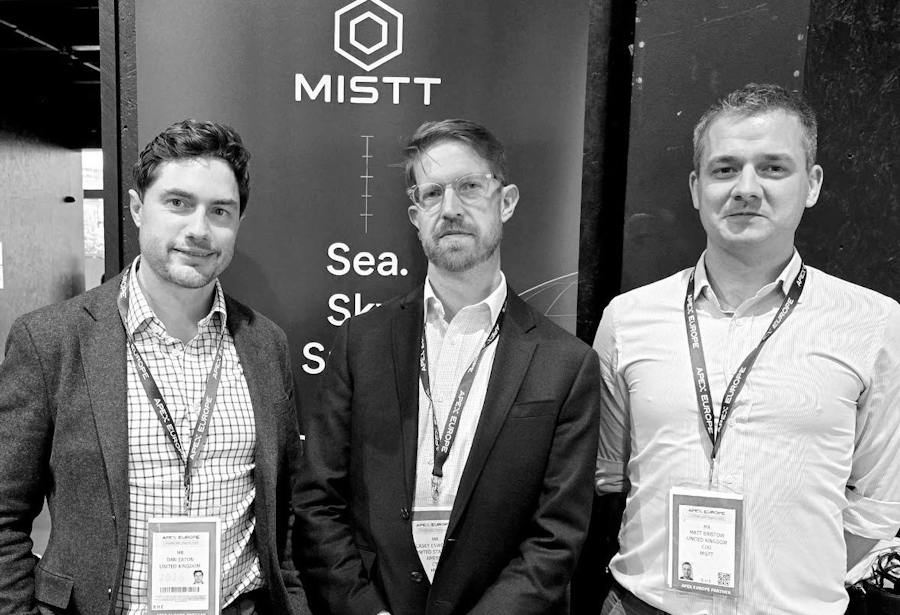
Dan Eaton served as an officer in the Royal Marines for over 20 years before founding MISTT. Chief Scientist Matt Bristow, formerly of DSTL, brings machine learning and geospatial data science expertise. CTO Casey Esworthy was chief architect at Microsoft until recently. Over the next 12 to 18 months, MISTT will grow its team, extend the platform's performance across domains, deliver the United Kingdom government pilots and expand its work with NATO allies.
Every new sensor adds to the complexity of the overall picture, as each understands the world from a different frame of reference. Whether you are training a world model or planning across a targeting web, multi-domain data fusion is only possible if you have a strong data foundation. A single 4D reference is the most effective place to start, as it unifies the data you own and lets your existing systems talk to each other. At MISTT, we don’t build world models or autonomous systems. We are building the missing layer that provides them with accurate context of the world across space and time.
We are excited to lead the round for MISTT. The operational and technical experience of the team is a powerful combination and MISTT is already making rapid progress, based on widespread demand. It turns out that most organisations can benefit from faster, better structured 4D data. At Expeditions, we believe that MISTT will be instrumental to defence data architecture across NATO, the autonomy stack and, in the longer term, AI world models.