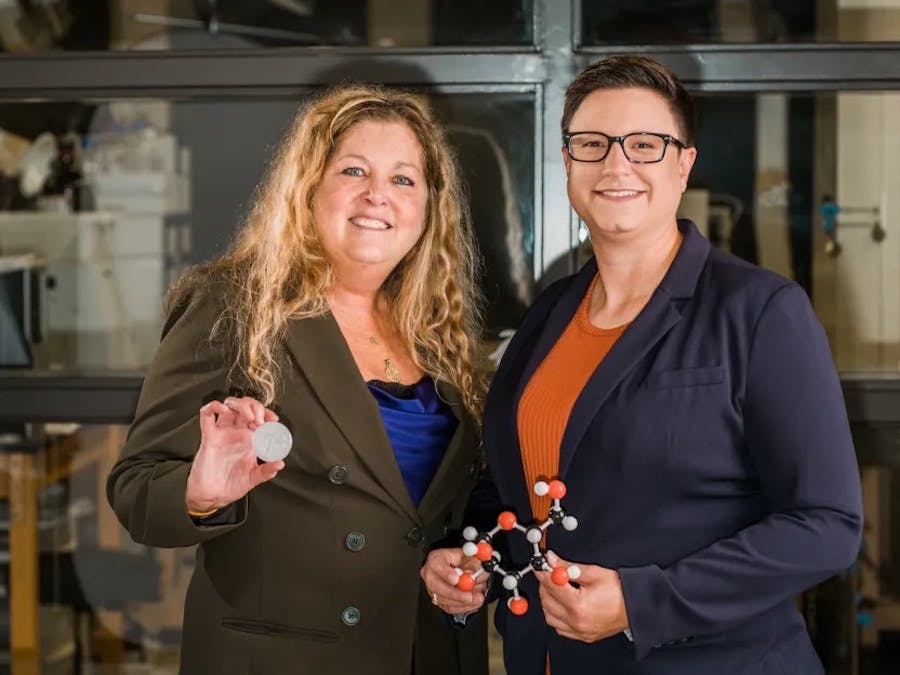
Teysha Technologies has been awarded £400,000 in non-dilutive funding after securing the 2026 Hill Prize in Physical Sciences, recognising its work to replace toxic, petroleum-derived plastics with safe, degradable alternatives made from agricultural waste. The award was granted through a joint venture with Texas A&M University and supports the translation of early-stage scientific research into real-world applications.
The technology behind Teysha was developed by Dr. Karen Wooley and Matthew Stone, alongside team members Dr. Senthil Kumar Boopathi and Dr. Ashlee Jahnke. Wooley and Stone were recognised for their patent-pending polymer chemistry, which converts plant-derived sugars and natural phenolic compounds into high-performance alternatives to bisphenol A (BPA).
These materials are engineered to match or exceed the durability and functionality of conventional plastics, while safely degrading at end of life, eliminating long-term environmental and human health risks. By focusing on safe and sustainable replacements for BPA, an ca. $20B USD/yr chemical of concern that is utilized as a monomer building block across polymer materials types, there is opportunity for enormous environmental, health and economic impacts.
Stone founded Teysha Technologies to commercialise this research, translating the chemistry into commercially viable materials through the company's KarmaCane biopolymer platform. KarmaCane materials have already been validated across packaging, cosmetics, 3D printing and durable goods, and are compatible with existing manufacturing infrastructure. They can be engineered as solids, liquids or water-based coatings, while fully degrading into natural sugars.
The funding will support the continued scale-up of KarmaCane, strengthening Teysha's manufacturing pathways in the US and Europe and accelerating engagement with global brand and manufacturing partners, as regulatory pressure increases around hazardous chemicals and persistent plastics.
The Hill Prize recognises the urgency of moving beyond incremental improvements in plastics. This funding allows us to accelerate the transition from university lab-scale innovation to materials that can be adopted by industry, without sacrificing performance or safety.
This award validates the idea that sustainable materials must work within existing industrial systems. With the Hill Prize, we can scale KarmaCane faster and support partners who are actively looking to replace toxic plastics with practical, high-performance alternatives.