Kinematic Trees, a robotics software startup, has raised £585,000 in pre-seed funding from Haatch. Proceeds come from Haatch across its SEIS Fund, D2N2 Early-Stage Angel Investment Fund, and British Business Bank 'BBB' Syndicate Fund, and will enable the nature-inspired, robot-agnostic software to scale and evolve with the latest advances in robot hardware.
Built as a software integration layer, the platform captures specialist expertise in modular components that can be easily reused, recombined, and elaborated for new deployments. Kinematic Trees works with robotics providers to develop integrated solutions for their customers, helps manufacturers bring advanced robotics products to market, and allows new developers to commercialise robotics software assets. Deployments cover factories, advanced manufacturing, healthcare, education and the creative industries, alongside advanced research projects on embodied artificial intelligence and cognitive architectures. Portability across different robots also means hardware left idle because its original software no longer works, or because the people trained to use it have moved on, can be brought back into service.
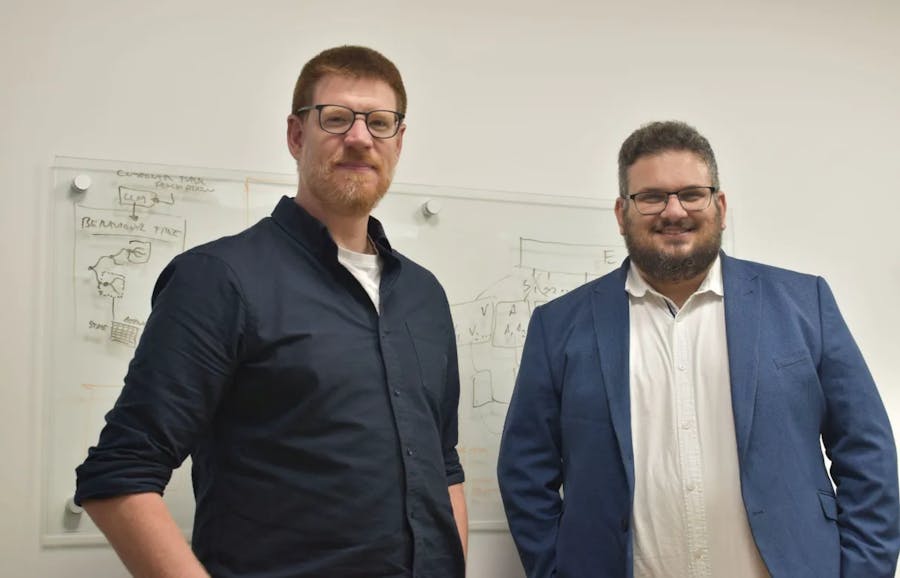
Founded last year by Dr Stuart Wilson, CEO, a Senior Lecturer in Computational Neuroscience at The University of Sheffield, and Daniel Camilleri, Chief Technology Officer, an exited co-founder of Cyberselves Universal, which later became Bettering our Worlds (BOW), the pair first discussed ideas for a 'universal robot brain' while attending Living Machines at Stanford University in 2017 and working on robot control systems based on theories of how animal brains adapt. Kinematic Trees is supported by Professor Tony Prescott, Scientific Advisor and Professor of Cognitive Robotics at The University of Sheffield, and chaired by Peter Hopton, who has raised over £23.9 million through accelerated startups as Chair and Founder of Venture.Community.
Funds will be used to build commercial, robotics and software engineering teams across London, Nottinghamshire and Sheffield in the United Kingdom, in line with product development, international deployment and major advancements in the robotics industry. Within 2H 2026, plans include announcing partnerships for first customer factory deployments, advancing commercial opportunities with software developers and robotics and automation providers, making major commercial and engineering appointments, and progressing academic conversations with contemporaries from international technology institutes and centres of excellence.
Advances in sensors, motors, and AI are now bringing robotics to people and businesses at exceptionally low cost. We're providing the intelligence layer to make those robots useful, inherently safe, and – perhaps most importantly – customisable. Robots should be able to do whatever we want them to, rather than what any particular company thinks we might want them to. With that layer for deploying advanced control systems, and orchestrating multi-robot teams, we will first build out specific expertise on production lines, in warehouses, within advanced manufacturing, in businesses and in homes. That expertise will then become useful for all, through modular software that can be reused, recombined, and elaborated – much like how natural intelligence evolves – to help get the most out of personal robots. The approach has an added benefit. Factory floors and research labs across the world are littered with hardware gathering dust because the original software no longer works or the people trained to use it have moved on. We can bring those robots back to life and ensure they never gather dust again.
The technology has been 10 years away for about 40 years. While conducting research at the University of Sheffield over 10 years ago, I saw many contenders come and go: All promising incredible hardware at great prices, but in the end not gaining enough traction to take off. At the same time, by applying psychology and neuroscience to robotics, I came to understand that minds and bodies are separable. The mind learns through the body it has been given but minds adapt in ways that translate across different embodiments, and are resilient across different environments. At Kinematic Trees this is the enabler: Bringing robots into mass adoption needs portability of software across different robots and an ecosystem of software capabilities so robots can become personal. Our robot-agnostic intelligence layer is inspired by nature and integrates software modularity, cognitive architecture, and AI accelerated design, making that ecosystem possible. We are creating the software needed for one mind to evolve through many different embodiments. In doing so, we want to bring advances in industrial robotics into emerging businesses and the growing consumer space.
Robotics hardware is advancing at an extraordinary pace, but its wider adoption still depends on having flexible, intelligent software that can work across different machines and environments. Stuart and Daniel combine deep expertise in computational neuroscience, robotics and commercial technology, and we were immediately impressed by both the ambition of their vision and the practical commercial applications already emerging. Kinematic Trees has the potential to become a critical intelligence layer for the next generation of robotics, and we are delighted to support the team as they bring that vision to market.