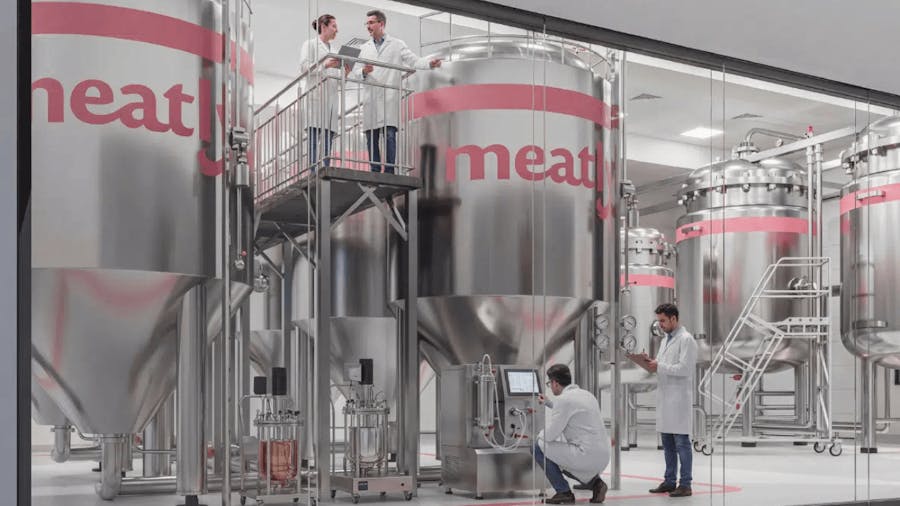
Meatly, a cultivated meat startup, has raised £10 million in a Series A from Agronomics, Oyster Bay Venture Capital, Clean Growth Fund and JamJar Investments. Meatly produces cultivated chicken using animal cells to create meat for pet food, with a focus on scaling production and reducing costs.
Founded in 2021, Meatly is working to address the cost and scalability challenges that have limited the cultivated meat sector. The production process uses a sample of chicken cells that are grown in controlled environments using nutrients, temperature and acidity to develop meat with essential amino acids, fatty acids, vitamins and minerals required for pet health.
Funding will be used to build a 20,000-litre cultivated meat production facility in London, with fit-out work beginning immediately. Product launches from the site are expected in 2027, as Meatly moves towards continuous production at larger scale for the pet food market.
Regulatory progress has supported early commercialisation. In 2024, Meatly became Europe’s first company authorised to sell cultivated meat after receiving UK approval for pet food. The following year, Meatly announced sales of what it described as the world’s first cultivated pet food product.
Across the sector, attention has shifted from early demonstrations to manufacturing at scale and improving unit economics. Efforts have focused on reducing culture media costs, improving cell density and developing scalable bioreactor systems. Meatly has reported reducing the cost of its protein-free culture medium to £0.22 per litre and lowering bioreactor costs by around 10x as part of this transition.
The pet food market has emerged as an initial entry point for cultivated meat due to regulatory flexibility and consumer demand for alternative ingredients. The round signals continued investor interest in infrastructure and production capabilities despite a more cautious funding environment across alternative proteins.
Working within an existing space reflects our broader approach, being capital efficient and focused on what actually moves the needle, which is production, not property. Once our pilot facility is operational, we’ll look to bring more products to market. Our immediate focus is the pet food market – it’s where we made history with the world’s first cultivated product of its kind, and this facility will allow us to make it more sustainable and scalable.
The market opportunity for sustainable and high-quality protein is enormous, but success in this category ultimately comes down to one thing: bringing down the cost of production.
Rethinking how we produce protein is an essential part of tackling the climate crisis. We’ve invested in Meatly because they are showing it’s possible to produce real meat cost-competitively and with a fraction of the environmental impact