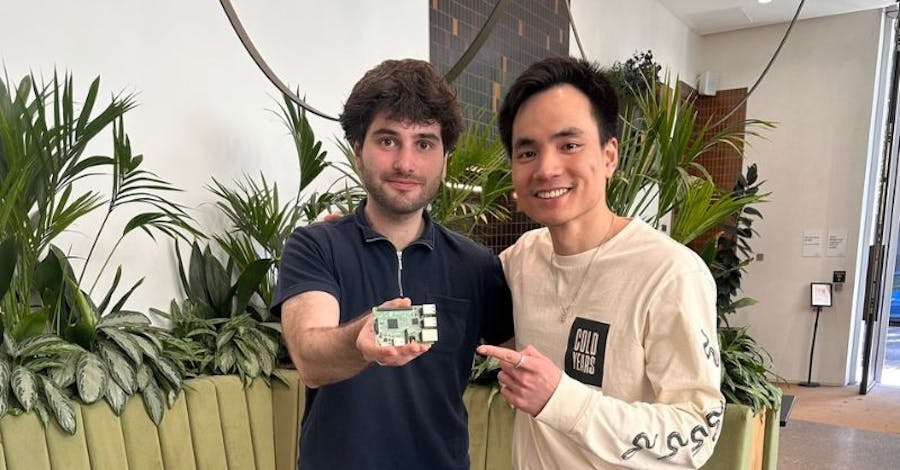
siliXon, a UK-based circuit design software startup, has raised more than £1.1 million in pre-seed funding led by System.One, with participation from Helloworld.vc and Antler. siliXon is building software designed to help engineers generate electronic board designs in minutes and reduce the amount of manual work involved in hardware development. The funding will allow siliXon to expand the team and continue developing the platform ahead of an open beta launch planned for the end of this month.
Founded by Mihai Mesteru and Bach Nguyen after meeting during postgraduate studies at the University of Cambridge in 2024, siliXon was created around a shared frustration with existing CAD software for electronics design. According to the founders, engineers still spend large amounts of time searching for compatible components, reading datasheets and integrating existing subsystems using software workflows that have changed little in decades.
The platform is focused on printed circuit board design, an area siliXon says sits underneath advances in artificial intelligence, robotics, transportation and energy systems. siliXon points to a growing global PCB market, currently valued at roughly $78bn and projected to reach almost $130bn by 2034. The founders argue that while hardware underpins modern intelligent systems, the software used to design electronics has not kept pace with advances in AI and automation.
Mesteru previously worked in hardware and electronics before studying electrical engineering at the University of Cambridge, while Nguyen brings experience in software engineering, data science and agentic AI development. Both founders chose entrepreneurship over academic careers after studying at Cambridge.
The idea started off as a passion project. I remember being frustrated with the software I was using while in the industry. It was too manual, and it took longer than needed to get anything done. The idea started off as simply a nicer-looking program to design circuits. Hundreds of calls later, we found that engineers are already trying to adopt AI to read through datasheets and suggest components. Their design software lives in the past. It’s time to change that.